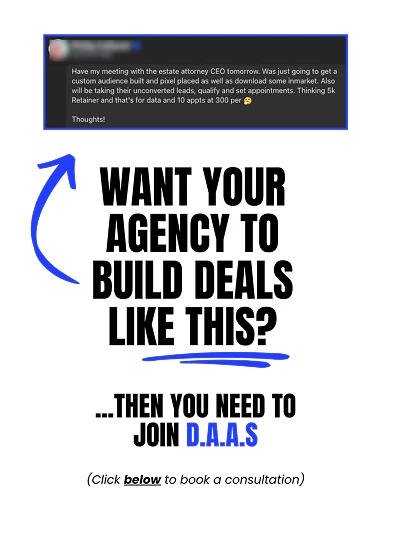
daas
The agency industry is entering a new phase. What worked in the past will not be enough to scale in the years ahead. Rising ad costs, automation, platform consolidation, and client expectations are forcing agencies to rethink how they grow. In 2026 and beyond, scalable agencies will not be defined by how many campaigns they manage or how large their teams are. They will be defined by ownership, automation, and data-driven leverage.
For years, agencies scaled by adding more clients and more people. Revenue grew, but so did complexity. In today’s environment, this approach is becoming unsustainable.
Common issues agencies face include:
Increasing labour costs with limited pricing flexibility
Talent shortages and high turnover
Client churn driven by inconsistent performance
Heavy reliance on platforms that control targeting and data
Margins that shrink as operations grow
This creates a situation where agencies work harder but feel less in control of their growth.
In 2026 and beyond, scalable agencies will not be measured by team size. They will be measured by how efficiently they can deliver value.
True scalability means:
Revenue can increase without proportional increases in staff
Fulfilment is automated rather than manual
Core assets can be reused across multiple clients
Growth is predictable and repeatable
This shift requires agencies to move away from labour-based models and toward asset-based models.
One of the biggest differences between scalable and stagnant agencies is ownership. Many agencies do not own the most valuable part of their work.
They rely on:
Platform-controlled audiences
Algorithm-driven performance
Third-party tools that dictate capabilities
When platforms change rules, agencies lose leverage.
Scalable agencies build and own:
Audience data
Targeting logic
Segmentation frameworks
Automation systems
Ownership creates stability and long-term value.
Data is quickly becoming the most valuable asset in marketing. Agencies that control data control outcomes.
Owning data allows agencies to:
Reduce dependency on ad platform targeting
Improve consistency across campaigns
Reuse and refine audience assets over time
Deliver better performance with less manual effort
This is why many agencies are transitioning to Data as a Service models. Instead of selling execution, they sell access to verified data assets.
AudienceLab enables this transition by giving agencies the ability to build, enrich, and activate verified B2B and B2C audiences across any platform. You can explore this model here:
https://audiencelab.io/daas/
In the next generation of agencies, automation is not optional. Manual fulfilment creates bottlenecks that limit growth.
Automation enables:
Faster onboarding of new clients
Consistent delivery without human error
Reduced operational overhead
Scalable fulfilment without team expansion
When data delivery, enrichment, and activation are automated, agencies can focus on strategy and growth rather than execution.
The most scalable agencies of the future will sell assets, not hours.
Examples of scalable assets include:
Proprietary audience segments
Industry-specific data products
Subscription-based access to data
Exclusive audience licensing
These assets can be sold repeatedly without rebuilding them from scratch. This dramatically improves margins and predictability.
This shift is already happening as agencies move away from traditional retainers and toward data-driven offerings.
Client expectations are changing. Many clients now have in-house teams or access to automation tools. They do not always need someone to run ads for them.
What they do need is:
Better inputs
More accurate targeting
Higher match rates
Clearer insights
Agencies that provide verified data and intelligence become strategic partners rather than execution vendors. This increases retention and pricing power.
Repeatability is a key characteristic of scalable business models.
Scalable agencies:
Use the same data assets across multiple clients
Apply proven segmentation frameworks repeatedly
Standardize delivery through automation
Reduce custom work that slows growth
Repeatable systems allow agencies to grow faster without sacrificing quality.
In the future, healthy agencies will prioritize margins over vanity revenue numbers.
High-margin agencies:
Have more flexibility during market changes
Can reinvest in better data and technology
Are less dependent on constant new sales
Have higher long-term valuation
Data-driven and asset-based models often produce margins of 70 percent or more because fulfilment costs are low and scalable.
Data as a Service provides a clear path to building a scalable agency business.
With a DaaS model, agencies can:
Build once and sell many times
Automate fulfilment and delivery
Create predictable recurring revenue
Reduce reliance on labour and platforms
A real example of this approach can be found in this use case where an agency created a Data as a Service offer with zero ongoing fulfilment:
https://audiencelab.io/use-cases/using-audiencelab-to-create-a-data-as-a-service-offer-with-zero-fulfilment/
Technology is the backbone of scalable agencies. Platforms that centralize data, automation, and activation are essential.
Key capabilities scalable agencies will rely on:
Verified identity resolution
Behavioural and intent-based data
Cross-platform activation
CRM and automation integrations
Real-time data refresh and enrichment
AudienceLab was built to provide these capabilities in a single platform, enabling agencies to scale without operational chaos.
Agencies do not need to overhaul everything at once. Preparing for 2026 starts with small, strategic changes.
A practical approach includes:
Identifying services with the highest fulfilment cost
Building audience assets around proven niches
Introducing data-based products alongside services
Automating delivery wherever possible
Gradually shifting revenue toward scalable assets
Over time, this transition creates a stronger, more resilient business model.
The agencies that thrive in the coming years will share common traits:
They own valuable data assets
They rely on automation instead of manual work
They focus on repeatable systems
They sell outcomes powered by data
They build businesses that scale without burnout
Agencies that remain tied to labour-heavy models will struggle to compete.
The agency business model is evolving. Execution alone is no longer enough to scale sustainably. Ownership, automation, and data-driven leverage will define the next generation of successful agencies.
Data as a Service is not just a new revenue stream. It is a foundation for building scalable, resilient agencies that can grow well beyond 2026.
If you want to explore how this model works in practice, start with the AudienceLab Data as a Service platform:
https://audiencelab.io/daas/